Last fall we started using a bokashi waste system. All food waste, including meat, bones, dairy and small amounts of oil and fat, went into a plastic 5-gallon bucket with a lid, combined with sprinkles of a microbial starter. We used a potato masher to pack down the waste as it accumulated, creating a fairly anaerobic environment. Once a bucket was packed full, we sealed it off from ambient oxygen and left it for at least a couple of weeks and started a new bucket.
After 2-4 weeks, the bokashi fermentation would be complete, Todd the Bokashi Guy told us. We took him at his word, but having seen the stuff coming out of the community bins at last fall's Harvest Festival it was hard to believe that much had actually happened. The food looked almost the same as when it had gone into the bucket. It smelled worse, to be sure -- a combination of vinegar and vomit, maybe? -- but the colour and structure was pretty much preserved.
Really, Todd? I thought. Well, let's work on the assumption that you're right. We'll assume that some sort of invisible process has occurred, and this stuff is really mostly digested like you say, appearances to the contrary. If you're right it'll turn into fully finished compost in days rather than weeks once we get it into the garden.
So all winter we fermented our food waste. When all three buckets filled we emptied the oldest of them in the compost area beside the garden to await spring. We piled on some dried leaves, and hoped beyond hope that once the pile warmed up in the spring we wouldn't end up with a party of bears and cougars feasting off a massive yummy pile of table-scrap soup.
And so now the weather is warm. And the verdict?
Todd was right!
Today I took the fork out and probed through the heap which has received a total of about forty gallons of food waste over the past seven months. The two most recent five-gallon additions to this pile were 4 weeks ago and 3 days (yes, days!) ago. I haven't done much mixing other than piling on some leaves, so I expected to see Monday's food sitting right below the top layer of leaves in all its colourful slimy glory. But no: there is an occasional recognizable bit of citrus fruit rind from the most recent addition, but other than that the pile is black gold.
And ... this has been our best spring in recent memory when it comes to bears. As far as I know we haven't had a single ursine creature lingering on our property. The dog agrees.
So yeah, bokashi for the win, I say!
Showing posts with label Gardening. Show all posts
Thursday, June 13, 2013
Wednesday, October 10, 2012
Bokashi
| Bokashi bin, and wheat-bran starter |
We've been outdoor composting for more than 20 years. We tried indoor vermicomposting for a while, but despite our best efforts couldn't entirely prevent fruit-fly outbreaks. We don't have a garage, so the worms were on their own outside, and eventually bears got the bin. And bears, really, are the problem. Yard waste won't attract them, but the food waste definitely does at certain times of year. Our solution has been to move the compost pile to the far corner of our property and let the bears snack as they like. But it's not ideal. Habituating the bears to human food waste is not such a great thing. Bears learn quickly and seem to share their knowledge through some sort of bear intranet. One compost bear tends to become several.
Winters present a different problem. Just getting to that faraway compost pile is a challenge when the snow is thigh-deep. No one likes doing it. Compost is the most dreaded chore on the kitchen chore rota. And of course, nothing actually rots during the winter, so in spring there's a gradual thawing of a mountain of food scraps. Just in time for the bears' arrival.
And now that most of us are eating meat a few times a week, we have the problem of bones and meat waste. We don't have garbage collection, so that stuff has to go into the freezer to be stored until we make our monthly trip to the dump.
So now we're trying something new. The chicken manure, leaves, garden waste, straw and grass clippings will keep going in the compost pile, but our food waste will go in our bokashi bin inside. Bokashi is Japanese for "fermented waste" and the bokashi approach to food waste processing was invented in Japan in 1980. It uses a combination of lactic acid bacteria, photosynthetic bacteria and yeast to ferment food and cellulose (i.e. wood/paper) anaerobically. Indoors, in a sealed container.
You put your food -- including citrus, meat, bones and dairy -- in a sealed drum or bucket with a wheat-bran "starter" which provides the micro-organisms necessary for fermentation. You sprinkle a little of the starter in every time you dump a day or two's worth of scraps into the drum, and re-seal it. Then, once it's completely full, you seal it fully for a minimum of 10-14 days. After that, it is fully fermented, won't attract animals, and is just waiting to fall apart into compost.
Last week we had a chance to intercept some bokashi bins at the post-fermentation stage. During the annual Garlic Festival in September, Fiona and I had worked a few hours on the waste management team. This meant directing visitors and food vendors to get all their recyclables in the appropriate bins, and to place any food or food/paper/wood waste in the buckets destined for the bokashi drums. The half-dozen 60-gallon drums underwent their fermentation, and were delivered to the school-and-community Harvest Festival last Friday by the bokashi guy. They were opened and dumped into trenches in the garden.
The stuff smelled pretty distinctive. Not horrid. Very cidery / vinegary. It was laced with the white mold that sometimes shows up in our compost pile and is a hallmark of a good bokashi process. Like the documentation suggested, it looked pretty much the same as it had when it went into the drums. It hadn't decomposed, but the bokashi guy assured me that much of the cell structure had been destroyed. It will apparently decompose in 10-30 days when mixed with soil or buried in a compost pile. The school bravely dumped a couple hundred gallons of the stuff into the garden beside the place where the little preschoolers play. And just as the bokashi buy promised, no bears have shown up.
I think it will take us 3 to 4 weeks to fill a 5-gallon drum. We have three drums. We'll fill two, wait the 14 days while working on the third one, and then take the fermented ones out to dump in the compost pile. That's one trip to the compost pile every 6-8 weeks. Two or three trips each winter. Sure, it'll require a sled. But that we can handle, given the infrequency of the requirement.
So far our bin smells cidery when opened, and harbours no flies. Thanksgiving turkey bits are in there, with dozens of plum pits, a few bamboo skewers, a lot of tea leaves, some paper and coffee grounds, a bunch of dried-out mozzarella cheese and the usual food scraps. Week one has gone as expected. We'll see how the winter goes.
Labels:
Gardening,
Living simply
Thursday, June 30, 2011
Macro perspective
I put the magnifying lenses on the DSLR camera the other day and Fiona had fun shooting up-close photos around the garden. A change in perspective is truly magical.
| Thyme |
| Parsley |
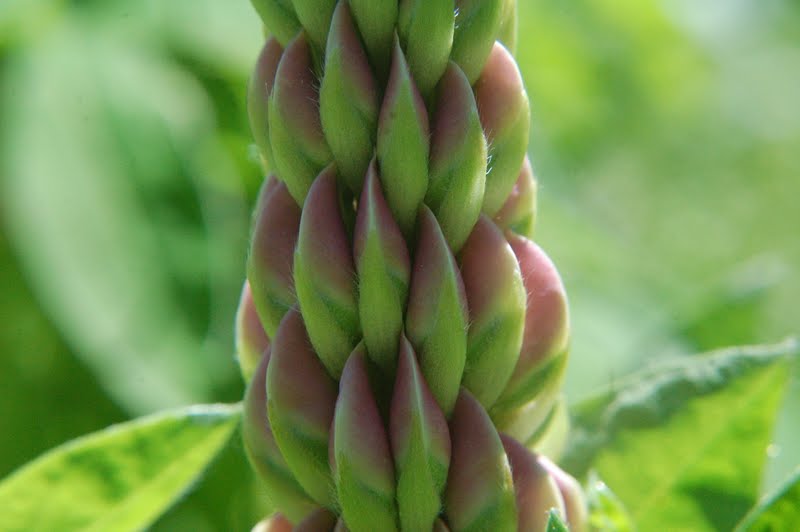
| Lupin top |
| Rosemary |
| Hawkweed |
| Hens & Chicks |
Labels:
Creativity,
Gardening
Thursday, May 19, 2011
Tea progress
Fiona's tea business is taking shape. Some organic ingredients have been purchased. These have been combined with wildcrafted ingredients like rosehips, peppermint and wild ginger. The wild ginger in particular has entailed several trips along trails for collecting but we now have heaps of the stuff.
Two herbal blends are shown. On the left is Ruby Red, a combination of hibiscus, goji berries, dried apples and rosehips. On the right is the Kootenay Wildcraft tea, a blend of wild ginger, rosehips, peppermint and lemon peel.
This morning the teabags arrived! We'd ordered 500 heat-sealable teabags. She will sell some tea loose-leaf, but most of it will go into teabags. Two grams of tea goes inside each bag, and then a few seconds with the iron along the open edge seals it up for good. She enjoyed making up a few today.
Next she's going to have to figure out packaging. She could just put 10 teabags in a ziploc bag, but somehow that seems a little conventional and dreary. She's had thoughts about labels and origami boxes.
In the meantime, it's fun to test out the teas, and to serve them up to guests for feedback. The Ruby Red is really lovely to behold in a glass cup.
And she's carefully tending all sorts of other herbs in flats and in the garden: lemon bergamot, peppermint, marigold, chamomile and lemon balm are growing, and lavender and anise hyssop starters are on their way to us by mail.
Labels:
Gardening,
Living simply
Monday, June 21, 2010
Fallow days
We finally finished disassembling the play structure. This involved sawing timbers away from seized bolts and digging out the four concrete footings. Now it only remains to transport the sandbox sand to the garden and fill the hole in with dirt from the mound left over from when we built the deck. I began this job today and it turned into an exercise in paleontology. There were several dinosaurs (plus a bull and a much-cherished rooster) discovered deep in the sand.
When I took some of the sand over to the compost pile, where we mix up soil for raised garden beds, I noticed that the manure pile was full of red wigglers. So we donned rubber gloves and picked through the pile until we had half a pound of the lively little guys, enough to start back at vermicomposting. We had a worm bin for a couple of years, until our former dog overturned it in the baking sun and chawed down on the container.
In the winter I think we might be able to keep the bin in the shop, which Chuck keeps slightly heated, and keep our little friends alive that way. We've kept it in the basement in the past, but inevitably despite our best efforts to the contrary we seem to get into problems with flies. For now, outside is perfect.
Yesterday I managed to take a hand-me-down double foam mattress apart, altering the cover on the sewing machine and cutting the foam down to size, re-assembling it as a twin-sized mattress that fits Sophie's bunk beautifully. She's been complaining of being uncomfortable in her bed for years; I don't know what her problem is: we spent a perfectly good $99 on that mattress 14 years ago. Anyway, she is a happy camper now and slept way past her 6:30 am alarm this morning.
Sophie has been baking today: chocolate coffee cake I believe. Fiona has been inventing recipes for savory dips and dressings. Creativity in the kitchen is always fun. The other day we made several dozen of these Hippie Bombs (renamed; formerly Energy Balls), which have become an instant hit.
Hippie Bombs
2 cups rolled oats
2 cups sesame seeds, toasted
2 cups sunflower seeds, toasted
2 cups chocolate chips
2 cups dried cranberries
2 cups goji berries
1 cup cocoa
1/2 tsp. salt (omit if PB contains salt already)
4 cups peanut butter
1 cup honey
3 cups flaked coconut, toasted, for coating
Combine all ingredients except coconut. Mix with spoon, spatula or hands as required. Form into balls with your hands. (They can be anywhere from truffle-sized to 1/4 cup in size depending on your preference. Ours are about 25 ml in volume.) Roll in coconut. Store in airtight container between layers of waxed paper. You could easily substitute almond butter for the peanut butter, or other dried fruits like chopped dates or raisins for the ones we used. The kids are trying to convince me that to be real energy balls these need to have a chocolate-covered espresso bean at the centre, but I've not been convinced.
Labels:
Creativity,
Day in the life,
Gardening,
Living simply,
Recipes
Friday, May 21, 2010
Moving a pond
This is where the pond and waterfall used to be. Under the apple tree about 20 metres from the house. A lovely shaded area, but with no seating nearby we rarely enjoyed it. Now that we have a deck, I decided the pond and waterfall should be there instead.
Over the past couple of days I've been moving rocks to release the pond liner, and then removing the liner and filling in the hole. The photo doesn't give a sense of scale: the pond liner is 3x5 metres, so this is a fairly large area.
The new pond will be much smaller -- basically just large enough to serve as a receptacle and reservoir for the waterfall. I've roughed it in at about 2 metres by half a metre. I'll cut the liner down to size.
Here's where I'm putting the new pond: just in front of the "apron" extension on the deck. I plan to build a rock wall up in the rear of the pond in part to hide the underneath of the deck.
Fiona and I bought some shrubs when we were in Nelson for her last piano lesson of the year. So we've also pushed ourselves to complete the little rockwall garden in front of the low portion of the deck -- despite the rain and cool weather we endured earlier in the week. We're just using whatever rocks we can find lying around the property looking for a home. I think I could become a rock mason in my next life. There's something really addictive about moving warm rocks around, looking at them from different angles, trading one off for another, until they find their perfect resting place, snugged in next to their well-fitted friends.
I think we still need some deck furniture soon, though, wouldn't you agree? After we get the repairs done on the van ...
Labels:
Backyard doings,
Gardening,
Living simply
Wednesday, May 19, 2010
Milo, and the Slide
Fiona and I went to the garden center in Nelson this week. We bought some bedding plants as well as some shrubs and herbs for the garden we're creating in front of the deck. Our old kitchen garden was clear-cut and covered when the deck went in, so we're starting anew.
Just as we were about to leave we discovered a little flat of Venus Flytraps. I'd always wanted a carnivorous plant, and Fiona, it turned out, not only wanted one but was quite knowledgeable about them. She told me all about trigger hairs and how big they could grow. It's fun to discover that now even my youngest child is now full of knowledge that I don't have, and I have no idea where she encountered it.
The specimens in the greenhouse were of diminutive proportions, but hey, a flesh-eating plant is a flesh-eating plant. We eagerly added it to our wagon load of shrubs and herbs.
It would have been too cliché to name it Venus, and we felt for sure he was male. So we settled on naming him Milo. Venus de Milo. Get it?
He's just a baby. But he's already been fed so many flies and ants that I'm sure he'll end up suffering from childhood obesity. Will we be able to keep him alive? We don't do so well with indoor plants, but we'll see.
On the way home from Nelson we had bad luck again. Last week we had got held up an hour from home by a nasty accident that closed the highway for half an hour and were late for our dinner meeting. Then, after driving to Calgary on Thursday and back on Saturday, and to Nelson all day on Sunday for a Suzuki performance and back home in the nick of time to get to orchestra rehearsal, and turning around and driving back on Tuesday for piano lesson, we got almost all the way home from Nelson only to discover that heavy rains had caused a mudslide that had closed the highway. We were told it would be a minimum of four hours before the road re-opened. We sighed, did a U-turn and drove back to Nelson, arriving exactly two hours after we'd left. Then we headed north, taking the longer route home, one mountain range over. Sigh. It was a long day. Fiona was a trooper. I hope she still has stamina left, because we have a day and a half of driving to do this weekend to get out to Vancouver Island.
We listened to podcasts to keep ourselves from getting too bored. Stuff You Should Know, Vinyl Café and Radio Lab were on the playlist yesterday. We recommend them all highly.
Labels:
Gardening,
Resources,
The ugly face of reality
Friday, April 30, 2010
Silted up
I love our water system, I really do. Our supply is gravity fed, fresh mountain spring water and it's free and plentiful and all ours. It comes from high up a mountain that has no human activity on it. It is to a certain extent surface water, though, so it does run the risk of silt and contamination from natural biological activity, so we have a set of four increasingly fine filters at various points. Good, plentiful clean water.
The disadvantage is that when it malfunctions it's all ours too. The first few years living here were really tough because of recurrent water woes. The guy who owned the property and maintained the water before us died, so there was no way for him to pass along to us the many secrets to keeping it working well. We knew there was a reservoir, and some sort of weird underground valve, some underground pipe and an intake pipe that came from "somewhere up there."
Gradually we figured out what the valve (and others we subsequently discovered) did, where the underground pipes were, and we followed the pipe up the mountain to find an intake bucket. But the water there was flowing out of another, larger and older underground pipe. Eventually Chuck found a neighbour who knew more or less where the primary intake was ... 15 minutes' walk up the mountain, through nettles and devil's club and over and under fallen logs.
These days appropriate maintenance has eliminated the winter freeze-ups we used to suffer from (and yes, I mean suffer... these were costly and time-consume to fix, and it is not with fondness that I recall melting and filtering snow for cooking and washing up, and banning toilet flushing, and "borrowing" showers and laundry facilities elsewhere). Winter has been good the past few years.
But I guess we'd kind of neglected the near end of the water system in recent years, the part safely buried deep in the ground, from the water-box reservoir to the house. Spring, when the volume and flow of the spring increases due to meltwater tumbling down Goat Mountain, is the troublesome time for the last 75 metres of our water system. And last week it silted up. Sophie, Fiona and I headed up to the box hoping the solution would be simple.
It was simple. But it was also pretty disgusting. There was a good foot and a half of silt in the bottom. And algae and other indefinable organic stuff was growing in the mound of silt around the outflow so that flow had completely stopped.
We set about vacuuming the silt out with a long piece of poly-pipe. I told Fiona "You suck." At first she was offended, but when she realized I meant she should suck on the poly-pipe to start the flow of silty goo through the siphon, she was blatantly unhelpful. In the end it was I who sucked. (And managed it without a mouthful, thank goodness!)
At times the silt was so thick it clogged the pipe and we had to bang and shake and fling to unclog it. We ended up emptying the entire contents of the reservoir down the hill. Twice. Water runs like crazy at this time of year, overflowing the various intakes and reservoirs to continue into the little creek, so we were just putting it back where it had come from.
We scrubbed down the walls of the water box with a long-handled push-broom, rinsed again, cleaned various filters and let everything fill up clean and fresh again, then opened the valves.
The girls had a blast building dams in the runoff, and ogling the silt. It smelled pretty awful, and looked disgustingly slimy as it accumulated. We were thoroughly grossed out.
But by the next day it had dried out and had taken on the appearance of something altogether lovely: black gold -- nutrient and mineral-rich decayed organic matter. Incredibly fine and totally free of weed-seeds. The best!
And so we scooped some up and brought it back and sprinkled it on our vegetable seedlings on the window ledge. And we'll go back with the wheelbarrow and get the rest to add to the garden beds in front of the deck.
The disadvantage is that when it malfunctions it's all ours too. The first few years living here were really tough because of recurrent water woes. The guy who owned the property and maintained the water before us died, so there was no way for him to pass along to us the many secrets to keeping it working well. We knew there was a reservoir, and some sort of weird underground valve, some underground pipe and an intake pipe that came from "somewhere up there."
Gradually we figured out what the valve (and others we subsequently discovered) did, where the underground pipes were, and we followed the pipe up the mountain to find an intake bucket. But the water there was flowing out of another, larger and older underground pipe. Eventually Chuck found a neighbour who knew more or less where the primary intake was ... 15 minutes' walk up the mountain, through nettles and devil's club and over and under fallen logs.
These days appropriate maintenance has eliminated the winter freeze-ups we used to suffer from (and yes, I mean suffer... these were costly and time-consume to fix, and it is not with fondness that I recall melting and filtering snow for cooking and washing up, and banning toilet flushing, and "borrowing" showers and laundry facilities elsewhere). Winter has been good the past few years.
But I guess we'd kind of neglected the near end of the water system in recent years, the part safely buried deep in the ground, from the water-box reservoir to the house. Spring, when the volume and flow of the spring increases due to meltwater tumbling down Goat Mountain, is the troublesome time for the last 75 metres of our water system. And last week it silted up. Sophie, Fiona and I headed up to the box hoping the solution would be simple.
It was simple. But it was also pretty disgusting. There was a good foot and a half of silt in the bottom. And algae and other indefinable organic stuff was growing in the mound of silt around the outflow so that flow had completely stopped.
At times the silt was so thick it clogged the pipe and we had to bang and shake and fling to unclog it. We ended up emptying the entire contents of the reservoir down the hill. Twice. Water runs like crazy at this time of year, overflowing the various intakes and reservoirs to continue into the little creek, so we were just putting it back where it had come from.
We scrubbed down the walls of the water box with a long-handled push-broom, rinsed again, cleaned various filters and let everything fill up clean and fresh again, then opened the valves.
The girls had a blast building dams in the runoff, and ogling the silt. It smelled pretty awful, and looked disgustingly slimy as it accumulated. We were thoroughly grossed out.
But by the next day it had dried out and had taken on the appearance of something altogether lovely: black gold -- nutrient and mineral-rich decayed organic matter. Incredibly fine and totally free of weed-seeds. The best!
And so we scooped some up and brought it back and sprinkled it on our vegetable seedlings on the window ledge. And we'll go back with the wheelbarrow and get the rest to add to the garden beds in front of the deck.
Labels:
Gardening,
Living simply,
The Natural World
Thursday, June 18, 2009
Spring dinner
I love this time of year. Garden fresh lettuce, chickens laying like crazy, the rhubarb is still plump and vigorous. Down the road it's calving and lambing time.Tonight for dinner I think we'll have lettuce and wild greens with a sweet vinaigrette made with garlic and dandelion syrup, and crĂŞpes with rhubarb filling. Mmm... dessert for dinner is a special treat!
Labels:
Gardening,
Living simply
Sunday, July 20, 2008
All mucked out
Oh, look at this stuff! It makes me so happy and proud!Procrastinator that I am, I prefer to just keep adding straw to the chicken coop to keep it relatively fresh. I do one big mucking-out a year.
This was the weekend. Six wheelbarrows-full of the stuff. Amazing rich, half-composted, nitrogen-laden stuff it is, mixed nicely with half-rotted straw. Mixed in with a little bit of grass-clippings it completely filled two of our three compost bays.
For the rest of the summer we'll keep it damp and mostly covered, adding yard waste and food scraps now and then. By next spring it'll be finished and we'll have three or four heaping wheelbarrows of dark amazing compost.
Now -- off to the sun shower!
Labels:
Closer to the source,
Gardening,
Living simply
Wednesday, May 14, 2008
First crumble
It's hard to believe, from looking at this, that there was 8 inches of snow on the ground a scant 3 weeks ago. Temperatures are still cool here, but the rhubarb is loving the weather. Fiona's peas, chard and spinach are all sprouting. Our tomatoes and peppers are growing lanky in a friend's greenhouse.Today we picked the season's first rhubarb. I had stocked up on brown sugar and butter in anticipation of twice- or thrice-weekly rhubarb crumble for the next month or so. We have four of these vigorous plants, all growing in clayish soil that shouldn't be resulting in such vigour, but we're not complaining at all.
How long does it take for rhubarb crumble to bake? One violin practicing (i.e. 40 minutes). How perfect! Now we just have to wait for it to cool a little and a spring rite of passage will have been completed.
With the May long weekend a scant two days away, temperatures ought to be a lot warmer than they are. Today hovered around 10 degrees C (50 F) at our place until well into the afternoon. Pretty chilly for mid-May. But tomorrow promises to be up into the 20's, and Friday and Saturday should be in the high 20's (around 80 F). It's about time!
Super Quick Rhubarb Crumble1/2 cup butter
1 1/2 cups oatmeal
1 1/2 cups flour
1 cup brown sugar
1 tsp. cinnamon
1/4 tsp. salt
1 cup water
1 cup granulated sugar
2 Tbsp. tapioca flour (or corn starch)
1 tsp. vanilla extract
5 cups chopped rhubarb
Place first 5 ingredients in a microwaveable bowl and heat gently until butter is softened. Mix together until well blended. Press a scant half of this mixture into the bottom of a 9x9" baking dish.
Mix water, granulated sugar and tapioca flour in a small saucepan. Heat and simmer until clear. Remove from heat and stir in vanilla.
Dump chopped rhubarb over first oatmeal mixture in pan. Drizzle the sugar/water sauce over the rhubarb. Sprinkle on the remainder of the oatmeal mixture. Bake at 350 F for 40 minutes. Serve warm or cool. Warm with vanilla ice cream is especially yummy!
Labels:
Gardening,
Recipes,
The Natural World
Saturday, March 29, 2008
Community garden cleanup
Every spring and fall we participate in a big clean-up bee at the community Reflection Garden. This year's spring clean-up seems much earlier than in past years though that's really only an illusion resulting from our unusually long winter. It's snowing outside at our house as I type. But the garden is on the lakefront, where the huge volume of water in the deep mountain lake acts like a heat sink, moderating both winter and summer temperatures. The 18 inches of snow we have up at our house has been reduced to a few dirty heaps at the Garden.
The company was good. An eclectic cross-section of the population, many retirees, lots of passionate gardeners and wanna-be gardeners there to glean some wisdom. There were plenty of homeschoolers. Oddly enough, in a town where less than 10% of children are homeschooled, 100% of the nine children there today were homeschoolers. That's just what resulted from a little blurb in the community newsletter -- no planning or anything. Two teens rode down on their bikes in time for coffee and snacks, and stayed to do a bit of work and to chat and play with the younger kids. And the younger kids loved their company; there were a few spontaneous games and some good-natured teasing. The big boys don't feel it's beneath their dignity to be silly with 5-year-old girls ... and they don't talk down to them either.We spent about 4 hours working hard -- raking, pruning, sweeping, loading wheelbarrows, filling compost bins, picking fallen leaves off shrubs, neatening up mulch, cutting back grasses, burning twigs, tying bundles of willow prunings up for the local artisan who makes baskets. We've taken part in this event for years and except for Fiona, my kids need little direction. They know what to cut back, where to rake, and they understand the co-operative routine of trucking wheelbarrows around the acre and a half of gardens.
Kids from five homeschooling families came, but there were no schoolchildren. What's up with that? One might postulate the schoolchildren's social needs are met, while homeschoolers have to work hard to fill their kids' social needs and therefore we have to take advantage of opportunities like this. But I don't think that's why any of us were there, really. We didn't go because our kids were craving social exposure. We were there because it is enjoyable and rewarding to work outdoors with a bunch of volunteers on a community project. The garden is a beautiful place to be and spring, however tentative, is worth welcoming with some good hard work in the dirt.Tomorrow we will attend a community concert, a fundraiser for our local fine arts summer programs. I'd be willing to bet that more than half the local kids who will be there in the audience will be homeschoolers. This is another benefit of homeschooling -- having the time, interest and energy to take advantage of all our community has to offer.
Labels:
Community,
Gardening,
Homeschooling
Saturday, September 08, 2007
Hubba-hubbard!
Sophie specializes in seeds. Typically her aim in her garden plots, both at home and at the GRUBS community garden, is to grow a lot of stuff that will produce a lot of seeds. She could probably start a radish seed business, for instance. And she had absolutely no interest in eating her lettuces. Now they are going to seed and she will carefully harvest the seed and save it for next year ... presumably to grow more seed.Last year Sophie won a door prize at the local Voices for Hospice event. The prize was a hubbard squash. Although she did eventually allow us to eat it, it was very important to her that we save the seeds. This spring she encouraged Fiona to plant one of them in her garden plot. Here is the result. Fiona's hubbard squash is now eight inches long and growing an inch or so a day. She's thrilled, and so is Sophie, who is like a doting grandmother watching Fiona raise the next generation of her vegetable progeny.
Labels:
Gardening
Friday, July 27, 2007
Babies
Silence descended. My eyes closed. Minutes passed.
Then suddenly an eager little face popped up over the side of the bed, mere inches from mine.
"I have baby tomatoes!" it whispered. "At home!"
I'm not sure what possessed her to shared the excitement of yesterday's discovery with me on the wrong side of 7 a.m., but what could I do but surrender to her wide-eyed excitement and that smile? We got up and as soon as I'd pried my eyelids up with a cup of coffee, we headed out to look at her little plot. It was true! Her garden at GRUBS has had baby tomatoes for a couple of weeks, but here at our higher elevation, it had taken longer. She was so excited -- not only to have the tomato babies, but to have been the first to discover them.
It wasn't only tomatoes. Miniature cucumbers were discovered, and two brilliant squash blossoms were trumpeting high on the trellis, heralding their own small squashy swellings.
Labels:
Gardening
Saturday, July 21, 2007
GRUBS jackpot
Also in the heap of debris, though, is a fair bit of decent cedar fence-board. Combined with salvaged bits of cedar 2x4's from our deck, we figure we might have a shot at building a small shed, something we've been dreaming of for a couple of years. Who knows?
Their bodies were about 3 x 1 cm and hairless. We replaced them as gently as possible and covered them up again. I hope mama finds her way back to them.
* GRUBS, for those who need some background info, is a club I started, together with another mom, about 2 and a half years ago. It's a club for families, focused on the triple mandate of organic gardening, community service and environmental education. The core members are mostly unschooling, but anyone is welcome. We applied for and were granted a parcel of land on the corner of the primary health care facility property, where a community-based Primary [health] Care Steering Committee had pencilled in a "community greenhouse" that had never materialized. We began developing a children's community garden and GRUBS meeting area on the site.
The site is perfect for our needs, in that it is adjacent to the lake (with its moderating influence on temperatures, giving us a somewhat longer growing season) and right in town. It has a partly-shaded lawn on one side, a swimming beach in front, and a lovely wooded area on the other side. There's a nursing home on the far side of the lawn, meaning that residents and their visitors often drop by to visit with the children. And the view, my goodness! Straight down to lake with nothing but mountainous wilderness to be seen. We are so lucky. It's a million-dollar parcel of gravel.
The gravel, pierced by beech and birch roots, has been our nemesis, though. The front half of the area in particular was bereft of any topsoil. So building the garden has been a big, long-term job. We stripped off the sod and composted it, then returned it to create a couple of raised beds. We created more raised beds at the back of the area using nutritionally depleted topsoil and great piles of manure we were generously given. And we continue to add almost anything organic we can find to the site in an attempt to create more growing substrate and nutrients.
In the meantime, we work here and there at community service endeavours. We're involved in harvesting and processing surplus fruit for people who are unable to manage their own. We bought a wonderful fruit press to help us towards that end. We volunteer with gardening and environmental work bees that occur around town. And we've had guest speakers come to talk to us about wildlife, wildcrafting, wildlife habitats and various other environmental issues.
This year we're all exceptionally busy with the rest of our chaotic lives. We try to meet once a week for a two-hour meeting and work party at the garden, but it's hit and miss. With visits to the garden haphazardly during the week, the kids maintain their own plots, and we manage to weed and water regularly. But it's been a bit of a challenge to keep the social energy and enthusiasm going from week to week. Still, when we get there on a Saturday morning and run into a couple of other GRUBS families and a couple of interested visitors, and see the riotous growth that has occurred since we were last together, it's clear that we're doing something long-term and important and exciting.
Labels:
Gardening,
The Natural World
Sunday, July 08, 2007
Out of the dirt
This is part of the GRUBS garden. Along this fence run a set of seven beds, each comprised of two 1x1 metre plots. These are the children's individual beds. When we started the GRUBS club we were thrilled to get a huge donation of well-composted horse manure. We put most of that manure into these beds; the soil in them is probably 50% manure.
Each child plants what he wants in his bed and is responsible for tending the bed through the spring and summer. What a variety of beds there are! One is a spare, careful arrangement of a small number of different veggies. Another is a riot of voluntary nasturtiums, radishes going to seed, dill and basil. Some kids have huge lettuces, while others are going for height with the beans, peas and sunflowers. One child planted mostly turnips. Another bed is full of poppies and a massive gladiola. Other kids have planted a little bit of everything. Some kids have a lot of weeds; in some plots the radishes, cress and lettuces are way past their prime and are bolting to seed.
If the point of the GRUBS individual plots was to grow the maximum amount of marketable produce over the growing season, some kids would definitely be far in the lead. But for the children, and by extension for the adults who mentor them here, it's not all about the product -- it's about the experience of having a garden. Every plot is fertile and productive in its own way. Some kids produce lots of attractive and useful vegetables, some produce beautiful flowers, and some produce some of each. But some kids don't grow any of that. Last year Sophie grew almost nothing but radishes, which she doesn't even particularly enjoy eating, and so she let most go to seed. It seemed a bit of a waste -- until the end of the season, when we pulled out the dried-up plants. It turned out that what she excelled at was generating seed, and at planting time this spring, and at this year's seed exchange, she was a hero with her large quantity of easter egg radish seed. The next generation of radishes has had a fabulous year, thanks to her. And then, there are the weeds. This spring one neglected plot became almost completely overgrown with weeds. One day as a favour Fiona and I sat down and weeded it out ... and suddenly realized that around his handful of dwarfed tomato and pepper plants this boy had grown us a bumper crop of sumptuous chicken feed. Our chickens were thrilled.
Do you see where this is going? Classically Gifted Kids are like plots of dirt that produce beautiful vegetables and flowers. But every plot of fertile dirt, like every child's mind, does a fantastic job of growing something. Maybe lowly but lovely turnips. Maybe radish seeds that will enliven countless other gardens in due course. Maybe just weeds, the purslane and lamb's quarters that chickens will enjoy. But incredible, miraculous growth nonetheless.
Labels:
Gardening,
Thinking about learning
Cherry picking
The GRUBS club volunteers to help pick fruit trees to reduce bear issues in town. We either give the fruit to the tree owner or, if (as is usually the case) the owner has a bumper crop and just wants the fruit gone, we save it to use in our Harvest Festival and/or to give away. This weekend we had a go at this Queen Anne cherry tree. As usual it was the youngest children who were the ones who wanted to spend all their time at the very top of the available ladders.
Thursday, June 21, 2007
Solstice visitor
Last night Sophie was sleeping in a tent just to the left of the camera frame. Fortunately this bear seems skittish and not habituated to human contact. I expect it would have steered very clear of her. It ran off as soon as it heard my camera shutter.
Unfortunately it also seems to have made an attempt (failed, thankfully) to break into the chicken coop. The window was torn partly off its hinges, though one hinge held and the chicken wire screen inside would have provided an additional barrier. I've nailed the window shut for now.
Wish I'd had the zoom lens handy. You would have thought me very brave and/or very foolhardy with a zoomed in shot, but alas, the camera bag was still inside the minvan from last night's parent-kid soccer game and party. Bears are certainly a fact of life around here, and we get used to them to a certain extent. They're one reason we've wanted to have a dog around. I think we'll need to get the air rifle out again this year. A pellet at 20 metres is enough to give a bear an annoying sting. With young bears especially it's helpful if they have a few negative experiences with people and garbage. They're smart, and they do learn to associate the two, so their behaviour won't tend to become problematic. This bear looks like a 3- or 4-year-old. Not its first summer away from mama, but possibly its second. These days the wildlife officers don't trap and relocate black bears. It's extremely expensive to do so, black bears are far from endangered here, and the recidivism rate is quite high, no matter how high in the wilderness they're released. Bears habituated to humans and residential areas are generally just shot. So in a sense shooting a bear with a pellet gun to give it a nasty sting is doing it a favour, giving it a chance to unlearn its problematic behaviour. But today I just shot this guy with a camera. I'll give him another chance.
Wednesday, June 20, 2007
Two tomatoes, chapter 2
Here are the two tomato plants I wrote about ten days ago. Scissors are for scale. Sophie's plant has opened up a still bigger lead. In fact, mine doesn't seem to have done anything at all since . Isn't compost magic?
Labels:
Gardening
Monday, June 11, 2007
Wormy again
All the chicken poop I added to the compost a month and a half ago is doing amazing things. It's about halfway finished composting already and we'll have another 10 cu. ft. of compost by the middle of the summer -- unprecedented! But the truly cool thing is that it's provided an environment for the growth of a huge colony of red wigglers, the much-sought-after composting worms. (Much sought-after in certain circles, anyway. Depends who you hang out with, I suppose.)
Three years ago we built a worm bin and purchased a pound of red wigglers to stock it. Our high quality food scraps went to the chickens, the middle grade stuff to the worms, and only a small quantity of the low-grade stuff went out to join the yard waste in the compost pile. This was a good strategy for keeping the bears and other wildlife at bay. Alas, the Abominable Dog dumped the worm bin, which we had been keeping in the carport at the time. Bye bye worms.
But now we're rid of the dog, and coincidentally zillions of red wigglers have shown up in the compost pile. So I've restarted the bin. It's chewed up a bit, courtesy of the aforementioned canine pest, but it's still functional. I've been grabbing a handful of worms every few days to stock the worm bin. They seem happy in there. They're starting to chow down on coffee grounds, grey guacamole and leftover pasta.
I love having a worm bin. (Okay, I'll admit it -- I love having worms. I'm not alone either. There are lots of enthusiastic groups of vermiphiles out there on the 'net.)
Labels:
Gardening,
Living simply
Subscribe to:
Posts (Atom)