The more I write, the more I realize there is to write. Yesterday Noah was noodling around on the piano while Sophie was noodling on her violin in the other part of the house. Noah started playing the horn solo melody from the end of Stravinsky’s Firebird Suite, a haunting theme he’s played many times on piano. It’s on the Naxos Jr. Audiobook version of the Illiad that we have, just a few seconds of it, and he loves it. Anyway, he happened to be playing it in the key of A. All of a sudden I heard Sophie trying to sound it out on the violin, and she managed just great. So Noah ran off and got his violin and the two of them played the four-bar theme together over and over, wandering around the living room giggling. Then Noah went back to the piano and started trying to harmonize an accompaniment.
Noah’s harmonizing ability is quite impressive. After only 6 spotty months of piano lessons, he’s able to harmonize simple melodies from the Suzuki violin repertoire in A major. He does other tunes too... Christmas carols, nursery songs. He uses tonic triads and dominant seventh chords very capably in a number of keys. No one has taught him to do this, though he has learned the I-V7-I chord progression by working through the Dozen-a-Day technique exercises. Subdominant triads and their inversions are a bit more hit and miss, but I’m sure they’ll click in the next month or so.
Tonight we finished reading "Abel’s Island" by William Steig. What a great story! One of those that's definitely as much for the parent as the children. We still have on the go: "A Single Shard" and "Eragon".
Erin finally finished the last couple of incomplete bits in Singapore Math 5A today. She’s been dabbling in 5B and level 6 stuff a bit for a while, but now she’s enthusiastic about starting to go through 5B systematically and filling in any holes there too.
Sophie helped bake muffins today. She made some neat observations about the array of 3x4 muffin cups. Her math abilities impress me... not so much her conceptual awareness, but how willing and capable she is when it comes to translating observations about mathematical patterns in the real world into arithmetical symbols. She continues plugging mostly self-directedly through the first Miquon Math book. She’s into multiplication now.
Noah is definitely less of a "wow!" kid in academic areas. He has tons of conceptual mathematical smarts, especially of the visual-spatial sort, but he’s actually finding the end of Miquon Red reasonably challenging. A year or two ago I thought he’d be done the program by now (six books; he’s only on the second). But things are clicking like crazy for him in other areas right now, so that’s fine. His violin sight-reading is going great guns, and of course I’ve written at length about his phenomenal piano composing and the leaps he’s taken in his playing ability in the last couple of months.
Tuesday, November 11, 2003
Saturday, November 08, 2003
Sophie's Birthday
Lately Erin, a horribly picky eater who says she'd like to be cook when she grows up (go figure... maybe she wants to develop new ways of putting cheese and bread and rice together?) has been doing lots more cooking. I was making baked beans the other day and doubled the amount of beans I prepared and turned half over to her. I showed her two or three baked bean recipes (none of which she'd ever be caught dead eating) and let her start improvising, adding ingredients that appealed to her to her pot. She came up with something that was not only palatable (though pretty salty!) but which passed her own standards. She ate some! So did the other kids. I opted for Mary's Curried Apple Baked Beans myself, but I tasted Erin's and they were pretty good.
Yesterday was Sophie's birthday. Since most of her buddies live an hour and a quarter away (where we do homeschool activities) and her grandma was away, we did our typical low-key nuclear family birthday celebration. I had made her a skirt to go with an eBay sweater/tights combination that I had bought for her. I also bought a Ravensberger "Mandala Maker" kit, sort of a cross between plastic stencils and spirograph. We have a family tradition that one birthday gift is for all the kids, and this one was a sure hit with all three older kids. There was a book and a soft doll from Grandma. Erin made her a hemp-and-bead anklet. Noah gave her a piece of art he'd made at art class, repeated black and gold patterns on rice paper. I did (if I do say so) a nice job of mounting it on foamboard as a checkerboard array. He had five 9x9 arrays each with a different pattern but the same process, and I made a 3x3 array of arrays (a centre square, then four more at each corner) with cardstock "matting". Noah was really pleased with how professional it looked and wants to take it to art class next week to show his teacher what it looks like all mounted.
The funny thing was that he had a big meltdown over how many gifts Sophie was receiving. His birthday was 6 weeks ago and in retrospect I think maybe he was disappointed with the pile of gifts placed in front of him. He'd chosen to open the one from his Grandma a couple of weeks early, and it was just one of those birthdays when we didn't go overboard. We had a long discussion about why we give gifts... I said that the proper reason for giving is because it gives us pleasure to give to people we love. We don't give because we'll get in trouble if we don't, and we don't give "in order to show how much we love someone". I pointed out to him that if the gift-giver knows that the person getting the gifts expects a certain amount, or might be angry if the gifts don't meet his expectations, that's going to reduce the pleasure the gift-giver experiences, and so it sort of interferes with the right reason for giving.
He got a little angry about that and ran away for some cooling off time. I guess it came across as a lecture, or a threat that I wouldn't give him stuff if he acted the way he was. I was clearly taking the issue very seriously, where I think he'd just felt a bit whiney as a result of the attention being on Sophie. He came back in a few minutes and said he'd changed his mind and he was okay about it all. I pointed out part of the reason Sophie was getting "so many gifts" was because he was offering her a gift. I don't know whether I should have just let it go, or whether it was an important teachable moment to grab. I have strong feelings about gift-giving taking precedence over gift-getting and have put a lot of thought into maintaining the focus on giving through the holiday season. But I'm sailing in uncharted waters here.
The funny thing was that at supper, Chuck explained to Sophie that "we give gifts because we love you" which sounded a lot like the opposite of what I'd been trying to explain. We both had to kind of backpaddle around that one. What a mess. We decided the crucial phrase was "how much". We don't give to show "how much" we love you. We give since, because we love you, it gives us pleasure to give.
I have an on-line friend who had asked if anyone had infant girl clothes for her aunt who has a new baby girl and no money at all. I had offered some of Fiona's outgrown clothes, and while I was packing them up yesterday afternoon I remembered that Tina has an almost-4-year-old herself who is facing a very financially-strapped Christmas, so the kids and I ran around collecting gifts for him to tuck into a shoebox. I didn't realize until I was typing this that this was a well-timed coincidence... a little exercise in giving on the heels of a meltdown over getting. Anyway, Tina's son is getting lots of craft materials, books, finger-puppets, a sprout-growing kit, some Canadian stamps and coins, a music story cassette, a glass prism, some other nice little things.
We tested out our nut milk recipe (which is great with cashews and macadamias and walnuts) with hazelnuts and almonds and decided we either need to win the Vitamix we're bidding on on eBay or strain the pulp off when using harder nuts. We're spearheading a music education fundraiser this fall. We've taken orders for organic dried fruit and nuts and ordered wholesale. When we repackage the orders, we're going to include a set of 4 recipes. We wanted to test how flexible the nut milk recipe is before sending it out.
After supper Sophie opened her gifts and we ate cake and the kids drew and coloured mandalas and then watched a video.
At bedtime we're reading "A Single Shard" by Linda Sue Park, set in medieval Korea in a potters' village. My kids are asking about working with clay. We have clay but no kiln. Our town has a number of skilled artisan potters, one of whom is a really excellent teacher of children. Erin did a workshop with her about 4 years ago. I might see if I can get another 4 or 5 homeschoolers interested in a morning workshop or two.
Today we're doing more fruit and nut recipe testing.
Labels:
Family Matters

Wednesday, November 05, 2003
Erics
The last week has felt rather unproductive but I'm sure some useful stuff has happened. We had a day or two of Hallowe'en costume preparations. I had great fun doing Dobby's eyeballs. I had made a paper mache mask anchored on paper plates and bits of cardboard, and left two round holes for those "tennis-ball-like protruding eyes". I plugged a loonie into one of those gumball machine things that gives you a prize in a plastic bubble, and used the bubble for the eyeballs. On the inside of the plastic half-spheres I masked two concentric circles, one for the pupil and one for the iris. Then I painted the pink arterioles, and the white sclerae. I unmasked the first circle and used a combination of gold, green and iridescent paint for the iris, using radial brush-strokes. Then I unmasked the last circle for the pupil which I left clear (and therefore "black") for Sophie to look out through. The effect was terrific!
The kids went trick-or-treating. Erin had a medusa head-dress with immensely bobbly wobbly snakes with googly eyes and forked tongues, and only one person knew she was a gorgon. The others had never heard of the creature or the myth, or only nodded with vague recognition when we explained what she was. Sometimes I wonder if these little brushes with "mainstream" society make the kids aware of how unusual their interests are. Noah's decided he wants to be a "mythology teller" (i.e. storyteller) when he grows up because there are clearly so many people who don't have a clue about these stories that have become such a part of the fabric of our family life. I don't know if he's planning to go door to door or what.
Everyone came down with a cold on the weekend. Blech. Lots of laid-back freeplay and computer time and not much else.
On Monday we went to Nelson. I probably would have cancelled except that Sophie was totally well and really wanted to go, and we had a lesson scheduled with a substitute piano teacher whom I didn't have a contact number for. And I had agreed to courier a violin down to someone, and to drive a kid 2 blocks to her house after gymnastics. So off we went.
It was Sophie's 3rd class and she was in from start to finish, even playing tag, something which had felt a little intimidating to her. Erin decided to do her class. Noah was feeling not so great so he sat part of the class out but joined in for the latter half. He managed a chin-up-pullover at the bar, the first in his class to master it. Erin's next closest to getting it (I think maybe small size helps?) but she didn't quite. This is the first time there's been such a stark and public reversal in their relative mastery of something. Usually Erin is better, quicker, more able and Noah does his best. I was interested to see how Erin would react. She asked why he could do it and she couldn't (a good sign, because when things bother her she doesn't talk about them) and I just said that he's really strong for his size and picks physical skills up very easily. She was fine with it. There really isn't a shred of competitiveness between my kids.
Piano was interesting this week. Our regular teacher, a straight-laced 60-ish woman who is quite a stickler for clean technique and carefully thought-out playing, was off being a spectator at a music competition. So we had "Eric", a recent university grad, cuurently trying to pull together a meagre living through piano accompanying in the area. The Wayside School stories we'd read recently had three Erics in the class: Eric Fry, Eric Ovens and Eric Bacon. Noah wanted to know Eric's surname to see if it was Ovens, Bacon or Fry, which it wasn't, but it turned out piano-Eric had read the books as a kid and loved them, so that was a connection right off the bat.
Eric was amazing... everything that our regular teacher isn't... young, male, silly, an amazing performer, and full of musical spunk and drive. As a regular teacher I'm sure he wouldn't have the vision and organization necessary to build solid skills, but as an occasional substitute, he's certainly got a refreshingly different spin on piano lessons. He had the kids improvising and sharing their compositions. He had them "driving" and "crashing" the piano, reaching deep inside themselves to find excitement and momentum in their music. He (like everyone else) told Erin she needed to slow down when practising, but rather than explaining that it would help her fix her stumbles, he told her that it would help her play faster... that appealed to her. Then he played a Beethoven sonata passage as he's been practising it... a lyrical contrapuntal thing, and then he played it at his target tempo... prestissimo, about 8 times faster. The kids' eyes just bugged out as they watched his fingers.
Eric will be teaching them for two weeks in December when their regular teacher is in Hawaii (her husband is the semi-retired owner of a travel agency... must be nice!). I've also booked him to accompany the kids for their violin selections for the annual recording of musical output we put together as a Christmas gift for relatives. I think the contact is really inspiring for the kids. They have lots of violin role models in their lives (family members, older students they play in orchestra with, etc.) but little in the way of piano ones. Eric will fit the bill very nicely indeed. I hope he stays in the area.
The other day all three kids were sitting on the couch giggling and reading Harry Potter 2. Sophie read the first two words ("Not for"). Noah read the first half page, fairly fluently at times. Then Erin took over and read a couple of pages. It was pretty cute, and a very informative illustration of their relative reading abilities.
Erin and Sophie made cookies together yesterday with no help except for getting the sheets in and out of the oven (we have a wall oven which, because of its cramped access, requires very long arms to reach into it from the side... if you saw our kitchen you'd be amazed that anyone can use it!). That was a first. Usually I help, and I'm way too controlling, micromanaging how they're pouring the vanilla, scraping the peanut butter, etc.. So I just got the heck out of kitchen and I'm sure they learned a lot more doing it all alone.
I'm scrapbooking like crazy, making a big memory book for mom for Christmas of our big musical family reunion before my dad's death. It's coming along wonderfully. Erin's making hemp bracelets and chokers for Christmas gifts.
The kids have been playing with Duplo a lot again (the chunky "toddler Lego"), because it's safe for Fiona. They're using elastics with it to make strange seige weapons that fling or bash. Over and over I notice that my kids are far more creative and happier when the raw materials they're working with are simpler. I think they'd be blissfully happy playing with a piece of construction paper and a stone. Give them a pile of K'nex or Lego and they muck around for a while and then leave it all over the floor. Nothing much happens except mess.
Today's plan is to make pumpkin pies from a pumpkin and to finish a couple of little gifts for Sophie's 5th birthday this weekend.
The kids went trick-or-treating. Erin had a medusa head-dress with immensely bobbly wobbly snakes with googly eyes and forked tongues, and only one person knew she was a gorgon. The others had never heard of the creature or the myth, or only nodded with vague recognition when we explained what she was. Sometimes I wonder if these little brushes with "mainstream" society make the kids aware of how unusual their interests are. Noah's decided he wants to be a "mythology teller" (i.e. storyteller) when he grows up because there are clearly so many people who don't have a clue about these stories that have become such a part of the fabric of our family life. I don't know if he's planning to go door to door or what.
Everyone came down with a cold on the weekend. Blech. Lots of laid-back freeplay and computer time and not much else.
On Monday we went to Nelson. I probably would have cancelled except that Sophie was totally well and really wanted to go, and we had a lesson scheduled with a substitute piano teacher whom I didn't have a contact number for. And I had agreed to courier a violin down to someone, and to drive a kid 2 blocks to her house after gymnastics. So off we went.
It was Sophie's 3rd class and she was in from start to finish, even playing tag, something which had felt a little intimidating to her. Erin decided to do her class. Noah was feeling not so great so he sat part of the class out but joined in for the latter half. He managed a chin-up-pullover at the bar, the first in his class to master it. Erin's next closest to getting it (I think maybe small size helps?) but she didn't quite. This is the first time there's been such a stark and public reversal in their relative mastery of something. Usually Erin is better, quicker, more able and Noah does his best. I was interested to see how Erin would react. She asked why he could do it and she couldn't (a good sign, because when things bother her she doesn't talk about them) and I just said that he's really strong for his size and picks physical skills up very easily. She was fine with it. There really isn't a shred of competitiveness between my kids.
Piano was interesting this week. Our regular teacher, a straight-laced 60-ish woman who is quite a stickler for clean technique and carefully thought-out playing, was off being a spectator at a music competition. So we had "Eric", a recent university grad, cuurently trying to pull together a meagre living through piano accompanying in the area. The Wayside School stories we'd read recently had three Erics in the class: Eric Fry, Eric Ovens and Eric Bacon. Noah wanted to know Eric's surname to see if it was Ovens, Bacon or Fry
Eric was amazing... everything that our regular teacher isn't... young, male, silly, an amazing performer, and full of musical spunk and drive. As a regular teacher I'm sure he wouldn't have the vision and organization necessary to build solid skills, but as an occasional substitute, he's certainly got a refreshingly different spin on piano lessons. He had the kids improvising and sharing their compositions. He had them "driving" and "crashing" the piano, reaching deep inside themselves to find excitement and momentum in their music. He (like everyone else) told Erin she needed to slow down when practising, but rather than explaining that it would help her fix her stumbles, he told her that it would help her play faster... that appealed to her. Then he played a Beethoven sonata passage as he's been practising it... a lyrical contrapuntal thing, and then he played it at his target tempo... prestissimo, about 8 times faster. The kids' eyes just bugged out as they watched his fingers.
Eric will be teaching them for two weeks in December when their regular teacher is in Hawaii (her husband is the semi-retired owner of a travel agency... must be nice!). I've also booked him to accompany the kids for their violin selections for the annual recording of musical output we put together as a Christmas gift for relatives. I think the contact is really inspiring for the kids. They have lots of violin role models in their lives (family members, older students they play in orchestra with, etc.) but little in the way of piano ones. Eric will fit the bill very nicely indeed. I hope he stays in the area.
The other day all three kids were sitting on the couch giggling and reading Harry Potter 2. Sophie read the first two words ("Not for"). Noah read the first half page, fairly fluently at times. Then Erin took over and read a couple of pages. It was pretty cute, and a very informative illustration of their relative reading abilities.
Erin and Sophie made cookies together yesterday with no help except for getting the sheets in and out of the oven (we have a wall oven which, because of its cramped access, requires very long arms to reach into it from the side... if you saw our kitchen you'd be amazed that anyone can use it!). That was a first. Usually I help, and I'm way too controlling, micromanaging how they're pouring the vanilla, scraping the peanut butter, etc.. So I just got the heck out of kitchen and I'm sure they learned a lot more doing it all alone.
I'm scrapbooking like crazy, making a big memory book for mom for Christmas of our big musical family reunion before my dad's death. It's coming along wonderfully. Erin's making hemp bracelets and chokers for Christmas gifts.
The kids have been playing with Duplo a lot again (the chunky "toddler Lego"), because it's safe for Fiona. They're using elastics with it to make strange seige weapons that fling or bash. Over and over I notice that my kids are far more creative and happier when the raw materials they're working with are simpler. I think they'd be blissfully happy playing with a piece of construction paper and a stone. Give them a pile of K'nex or Lego and they muck around for a while and then leave it all over the floor. Nothing much happens except mess.
Today's plan is to make pumpkin pies from a pumpkin and to finish a couple of little gifts for Sophie's 5th birthday this weekend.
Labels:
Homeschooling
Tuesday, October 28, 2003
Learning in the Flow
Noah was using the text-to-speech synthesizer on one of our old programs (DK Children’s Encyclopedia) this morning, practising spelling that could be properly pronounced by the computer. He discovered the use of periods in creating sentence breaks. He wrote: "Age of Mythology is a game of heros and montsters. You build reinforsments. You create beasts." He had help with ‘build’ and ‘create’ and ‘beasts’. It was a useful exercise for him from the standpoint of reading and spelling. He also got some practice at putting thoughts and explanations into writing.
Erin asked for a chance to "do school". By this she means a game and a schedule whereby she and I outline a bunch of semi-structured activities (a lot of them bookwork) for her to do through the day. She asked for some "research questions" as one of the activities. This was a new idea for us. I put together the following list:
What is a "pixel"?
Who was born first, Brahms or Beethoven?
What's the capitol of El Salvador?
What do iguanas eat?
What is "6!" (6-factorial)?
Where does the word "tesselate" come from?
Who said "we have nothing to fear but fear itself"?
Who wrote "20,000 Leagues Under the Sea"?
What does chlorphyll do?
Who was Marie Curie and what did she do that was so important?
Where is the magnetic north pole located?
What is a "bearded dragon"?
Who was Guy Fawkes?
Where does the word "bonfire" come from?
What is the origin of Hallowe'en?
What is a menorah?
Draw an isoceles triangle:
She got about 6 of these in half an hour or so and is saving the others for another day (or two, or three). She quite enjoyed it.
Noah was right into group class this evening. It was the second group of the year. Last spring he started participating, after a long period of saying he wasn’t quite ready. Boy, is he ever ready now! Other parents were pulling me aside to ask if he was always this "attentive and full if joy" or always "such a model student". He had lots of grins and laughs, lots of ideas to contribute, tried hard at everything and obviously loved the class.
Erin spent some time writing today (on the computer). She says she’s got farther with this latest story than she ever has with a story before. I didn’t press her on details. She’s intensely protective of her writers’ privacy.
Labels:
Homeschooling
Monday, October 27, 2003
Nelson Day
Nelson day. Sophie was right into gymnastics today... only hung back for a couple of minutes right at the start. I’ve never had a kid so young who partipicated so eagerly. Maybe we’re getting incrementally less introverted kids as we keep at this racket. She’s the youngest kid by a good 6 months and the smallest by far, but is doing great at skills and following directions.
Erin and Noah are doing well in gymnastics too. Noah is feeling strong and capable. He’s the youngest in his (7-to-10yo) class and is definitely in the more able half. His listening skills (and Erin’s too) are exemplary. Erin was actually keen to do some math problems during Sophie’s gymnastics class. She’s feeling quite comfortable with the current work and she always does math willingly when it’s interesting but relatively easy.
Grocery shopping. I left the older two to eat in the minivan and join us in the store when they were done. Just before that we dropped off a friend at her house after gymnastics. She’s older than Erin, and I laughed when I realized it was less than 2 blocks that she’d have had to walk, in a safe little Canadian town. Why don’t people give their kids this kind of responsibility? I had fun shopping. We weren’t in a rush, and I bought a few special little things for the kids for Hallowe’en. Bought them another Garfield book of comics. Noah reads them repeatedly for reading practice and pleasure, so they’re worthwhile. Erin devours them.
At piano lessons, Noah got a lot of positive feedback about his latest composition "Achilles’ Death". His teacher was really impressed and that was clear to him. He was very pleased. Composition seems to be the area Noah has chosen to be comfortable with recognition, much as Erin is with performing.
I had to work tonight. Because Erin agreed to drop Youth Choir this year, I had time to cook and eat supper after getting back from Nelson and before heading out to Nakusp (in the opposite direction). The kids watched the second half of a miniseries on the Halifax explosion of 1917. We have a short historical fiction book about it, which I hope the kids will be interested in hearing aloud soon, but we’ve got so many novels on the go right now it’ll be a while.
No violin practising today. Sometimes a surprise holiday is a good thing. I announced at supper that I thought it was a good day for a break. The kids agreed.
Labels:
Day in the life,
Homeschooling
Sunday, October 26, 2003
Life is Music
Music composition is in high gear around here. Noah has two or three pieces on the go and Erin the same. They noodle around on the piano until they have something they think is worth keeping and then they play it for me to transcribe on the computer in Finale format. They’ve each got notebooks of compositions printed off to save and share. Noah is planning on hosting a "living room recital" for composers and their fans. Since all of his pieces are under about 30 seconds in length, I thought it might be kind of short, so I suggested I could write arrangements for small violin/viola ensemble to try out. He’s keen on this idea. We’ve done "dessert recitals" in the past and have a cluster of friends both young and old who are familiar with the format and would probably enjoy coming. We do potluck snacks and social time afterwards. We're tentatively planning this for November 16th or thereabouts.
Violin and piano practising have been easier lately all around. Both Erin and Noah have settled into the weekly lesson routine now. It was a bit of a shocker to be having lessons once a week on both instruments for the first time in six months. Both kids felt the expectations going up and balked a bit. But they love their lessons and are now comfortable with the routine again. Erin is now having her lessons and practising violin completely independently now. She played the most amazingly musical, careful, clean, stirring rendition of "Humoresque" last week at her lesson. I thought it was her grandma/teacher playing at times, it was that beautiful. She continues to struggle with the diligent attention to detail necessary in the heap of Book 6 repertoire she’s taught herself. But hopefully it will come. She just needs to slow down her tempi, but finds it impossible to exercise that self-discipline. Noah’s violin work is trudging along. Last week he was polishing up "Gossec Gavotte". This week he’s learned "Musette" and is doing a great job. He continues to really balk at any situation where he feels he’s being tested. Score-keeping and note-name quizzes make him very uncomfortable at his piano lessons. He’s asked me to tell his teacher this.
Last week Sophie played her violin for her grandma and prospective violin teacher (the same person) at the family lesson time for the first time ever. She played Twinkle Theme and Lightly Row and felt quite pleased with herself.
Life isn’t all music, though it sometimes seems like it. Erin and Noah are doing an art class and working with patterns. They’re making some connections with mathematical patterns which is neat to see. Yesterday I made some stamps using a lino cutting kit and safe-T-cut blocks and used them to make wrapping paper out of a roll of kraft paper. I’d hoped to entice Erin and Noah into some pattern-making of their own. Noah noticed "that’s like what we’re doing in art class" but that was the extent of the interest. I finished the wrapping paper on my own.
Hallowe’en is next week. Noah’s "Grim Reaper" costume is done. He was inspired in this choice by his grandpa’s death last summer. We’ve talked a lot about whether the GR is evil or not. I think this is Noah’s way of working out whether death is bad, evil, fearsome. We talked about "fate" and the GR as the messenger of fate, not a murderer. He seemed happy with that explanation. He was quite intrigued by a "Far Side" cartoon I pointed out to him last week too. "Unbeknownst to him, Herb has a brush with death." Herb has just bumped into the Grim Reaper in a crowd on a city street and yelled over his shoulder "hey buddy, watch yer elbow, willya?"
Erin is planning to be Medusa. I’m cutting and sewing snakes out of a discarded sweater. Sophie will be Dobby, the house elf from Harry Potter. Her mask is mostly done (paper maché) and the costume will be simple (bright socks and a ragged pillowcase over some dark clothing).
This afternoon the kids have been out working on their tipi in the woods. I have no idea how or what they’re doing. At one point I helped them measure off a 3 metre stick and suggested they needed to find a bunch of others and cut them to length. They have a saw, a hammer, nails, goggles and ear pro. They tell me they now have three sticks that are standing up supporting themselves, without any rope or nails. They used the fork in one stick to hold another and then used the fork created by those two to hold the third. Erecting it must have taken some good teamwork! The days are getting shorter and the snowline is drawing lower, and they’ll not get much more done before winter settles in, but they’re planning this for spring mostly. They’ve had great fun trying on their snowsuits in the past few days.
Erin has latched right onto the "Royal Diaries" scholastic series. She read one or two a year ago but didn’t get smitten then. Now she’s reading and re-reading the ones she owns or has borrowed. She’s been on-line and dumped about 20 of them into my "wish list" at Amazon.com . I haven’t read any of them, but I understand they’re pretty decent historical fiction. I was impressed that Erin has been researching the series offerings, comparing authors, checking publication dates, and deciding which ones she’d like first. She explained to me that Katherine Lasky is the writer she likes the best, and that hers especially are the sort of book that is worth reading repeatedly.
It’s Sophie’s 5th birthday in a couple of weeks. Noah said he might give her one of his art class projects. Erin hasn’t thought of anything yet. I’ll be investigating bookbinding as part of a Christmas gift project, so I’ll see if she’d like to make a little personalized easy reader for Sophie (who is sounding out the simplest of phonetic words these days), using the new colour printer. It’s been hard to lead her into new interests in the past year or two, though... she wants ownership over her hobbies, and if I’m interested that seems to interfere with her ownership.
Labels:
Family Matters,
Homeschooling,
Music education
Saturday, October 25, 2003
Introduction
An introduction. We are a family of six living in the rural southeastern interior of BC, Canada. We have a dog, a cat, some laying hens, a vegetable garden, some fruit trees and a million-dollar view of unspoiled mountain wilderness.
Chuck is a local small-town GP. He's also a DIY guy who enjoys mucking around in his shop, building furniture and looking after the property.
I'm Miranda, a violinist, violist, Suzuki violin teacher and occasional small-town GP.
Erin (who will be 10 early in 2004) is bright, stubborn, introverted and intellectual. She reads and writes at a very high level and has for years. She's also a talented violinist and pianist.
Noah (recently turned 7) is sensitive, creative and easy-going. Though somewhat less achievement-oriented than his older sister, he has an incisive mind and excels at seeing things from multiple perspectives. He's a rapidly progressing violinist and pianist and a passionate composer.
Sophie (who will be 5 soon) is cheerful and full of imaginative energy. She's recently taken to the violin like a fish to water. She is showing some of the same intellectual precocity as her older sister, but thankfully without much of the "spiritedness".
Fiona is 9 months. She's already doing everything she can to keep up with her siblings. The older kids have amazing relationships with her.
The kids have never been to school and have no interest in it. We enjoy the support of most of our extended family and of a fairly non-judgmental local community.
Labels:
Family Matters
Tuesday, August 05, 2003
Unschooling apologetics
This is a message I rediscovered four years after it was written, deep in my "Sent Items" folder in my e-mail client. I wrote it in response to someone's questions and experiences. I've dated the blog entry to match the original date I wrote it:
I think you've probably discovered through experience that non-coercive education (unschooling is way down this end of the spectrum) tends to be linked to non-coercive parenting. Non-coercive parenting sometimes means kids are rowdy and poorly behaved, though at its best it really shouldn't. I'm into "as non-coercive as I feel is realistically possible" parenting, and my children are, by all reports, exceptionally well-behaved. It helps that they're introverted and thus don't like to stick out in public. But I readily intervene to enforce my standards if the rights and feelings of others are at stake and I am unable to come up with a mutually advantageous alternative.
It's unschooling, not unparenting, though sometimes the two do get muddled up together a bit.
"If I wasn't mandated into having to take that class for my degree requirements, I never would have thought about everyday situations with a 'physics-slant' which alot seem to have. The subject seemed totally off the wall and unrelated to my 'real' life until I actually thought about specific situations in 'physics' terms."
This is a great pro-unschooling example, as I see it. Because, you see, you weren't mandated to take physics. You refused to take it through high school because it wasn't meaningful to you. You didn't study it until you decided that on balance it was worth it to you. You chose to go to college and to pursue a degree which required physics credits. You could have quit, or changed your degree focus at any time, and no one would have "given you heck" or told you that you couldn't. Physics was an means to and end to which you had voluntarily committed yourself. Were you harmed by avoiding physics as a high-schooler? I doubt it. In fact, I'd wager that by not being forced to take it "just because", by waiting until it was meaningful to you as a means to a specific end, that you probably approached it with less negative psychological baggage and also, at the college level, received a more skilled, inspiring and relevent form of physics education. (I have a very similar story about my own physics education.)
Unschooling doesn't mean "only doing what is inherently fun and enjoyable". It means "only doing what has relevence and importance within one's own frame of reference". My 9yo dd has just spent a couple of days going through help files and tutorials on using a spreadsheet program. I asked her at one point if she was having fun and she said "no, this is boring, but I need to find out how to _____ so I can ______." I think this is typical of children who haven't had adults make the decisions concerning what's good for them. They are willing to do the spade-work to get where they want to go. No one needs to "make them".
"How will the children 'grow' in areas that they have no interest in if they are not even exposed to these areas because they didn't 'feel' or 'want' to study them?"
Personally I think it is the unschooling parent's job to provide opportunities and exposures. Not to drag a kicking and screaming child to piano lessons or math workbooks or anything, but to offer different possibilities over the years, model interest, to gently point out places where knowledge or skills are relevent, and so on. It's an 18-year plan, this unschooling thing, so if your child isn't interested in learning to work out the area of a triangle today, you've probably got another decade or so for the interest to arise.
But if your child never develops an interest in the formula for the area of a triangle, what's the big deal? If he needs to calculate it at some point in the future, being a self-motivated, can-do unschooler, he'll know how to teach himself. He'll grab a geometry basics textbook at the library, or type into Google and have it sorted out in ten minutes.
"I simply cannot trust that my guidance is not needed."
Guidance is needed in unschooling, of course! It's needed every time your child asks for help in learning something, or expresses an interest (even implicitly) in pursuing something but doesn't know where to turn. You need to model active learning, interest in and curiosity about the way the world works, work to inspire interests, to strew interesting resources and opportunities in your child's path. And somehow, in this culture that prefers to partition children into a separate reality, you need to create for him the kind of lifestyle and range of experiences that allows him to intersect with meaningfully with real life. The parent has a huge role to play in the education of unschooled children, at least as big a role as in the education of children homeschooled in a more traditional fashion. It's more of an art than a science, though.
I think you've probably discovered through experience that non-coercive education (unschooling is way down this end of the spectrum) tends to be linked to non-coercive parenting. Non-coercive parenting sometimes means kids are rowdy and poorly behaved, though at its best it really shouldn't. I'm into "as non-coercive as I feel is realistically possible" parenting, and my children are, by all reports, exceptionally well-behaved. It helps that they're introverted and thus don't like to stick out in public. But I readily intervene to enforce my standards if the rights and feelings of others are at stake and I am unable to come up with a mutually advantageous alternative.
It's unschooling, not unparenting, though sometimes the two do get muddled up together a bit.
"If I wasn't mandated into having to take that class for my degree requirements, I never would have thought about everyday situations with a 'physics-slant' which alot seem to have. The subject seemed totally off the wall and unrelated to my 'real' life until I actually thought about specific situations in 'physics' terms."
This is a great pro-unschooling example, as I see it. Because, you see, you weren't mandated to take physics. You refused to take it through high school because it wasn't meaningful to you. You didn't study it until you decided that on balance it was worth it to you. You chose to go to college and to pursue a degree which required physics credits. You could have quit, or changed your degree focus at any time, and no one would have "given you heck" or told you that you couldn't. Physics was an means to and end to which you had voluntarily committed yourself. Were you harmed by avoiding physics as a high-schooler? I doubt it. In fact, I'd wager that by not being forced to take it "just because", by waiting until it was meaningful to you as a means to a specific end, that you probably approached it with less negative psychological baggage and also, at the college level, received a more skilled, inspiring and relevent form of physics education. (I have a very similar story about my own physics education.)
Unschooling doesn't mean "only doing what is inherently fun and enjoyable". It means "only doing what has relevence and importance within one's own frame of reference". My 9yo dd has just spent a couple of days going through help files and tutorials on using a spreadsheet program. I asked her at one point if she was having fun and she said "no, this is boring, but I need to find out how to _____ so I can ______." I think this is typical of children who haven't had adults make the decisions concerning what's good for them. They are willing to do the spade-work to get where they want to go. No one needs to "make them".
"How will the children 'grow' in areas that they have no interest in if they are not even exposed to these areas because they didn't 'feel' or 'want' to study them?"
Personally I think it is the unschooling parent's job to provide opportunities and exposures. Not to drag a kicking and screaming child to piano lessons or math workbooks or anything, but to offer different possibilities over the years, model interest, to gently point out places where knowledge or skills are relevent, and so on. It's an 18-year plan, this unschooling thing, so if your child isn't interested in learning to work out the area of a triangle today, you've probably got another decade or so for the interest to arise.
But if your child never develops an interest in the formula for the area of a triangle, what's the big deal? If he needs to calculate it at some point in the future, being a self-motivated, can-do unschooler, he'll know how to teach himself. He'll grab a geometry basics textbook at the library, or type
"I simply cannot trust that my guidance is not needed."
Guidance is needed in unschooling, of course! It's needed every time your child asks for help in learning something, or expresses an interest (even implicitly) in pursuing something but doesn't know where to turn. You need to model active learning, interest in and curiosity about the way the world works, work to inspire interests, to strew interesting resources and opportunities in your child's path. And somehow, in this culture that prefers to partition children into a separate reality, you need to create for him the kind of lifestyle and range of experiences that allows him to intersect with meaningfully with real life. The parent has a huge role to play in the education of unschooled children, at least as big a role as in the education of children homeschooled in a more traditional fashion. It's more of an art than a science, though.
Labels:
Homeschooling,
Thinking about learning
Monday, July 07, 2003


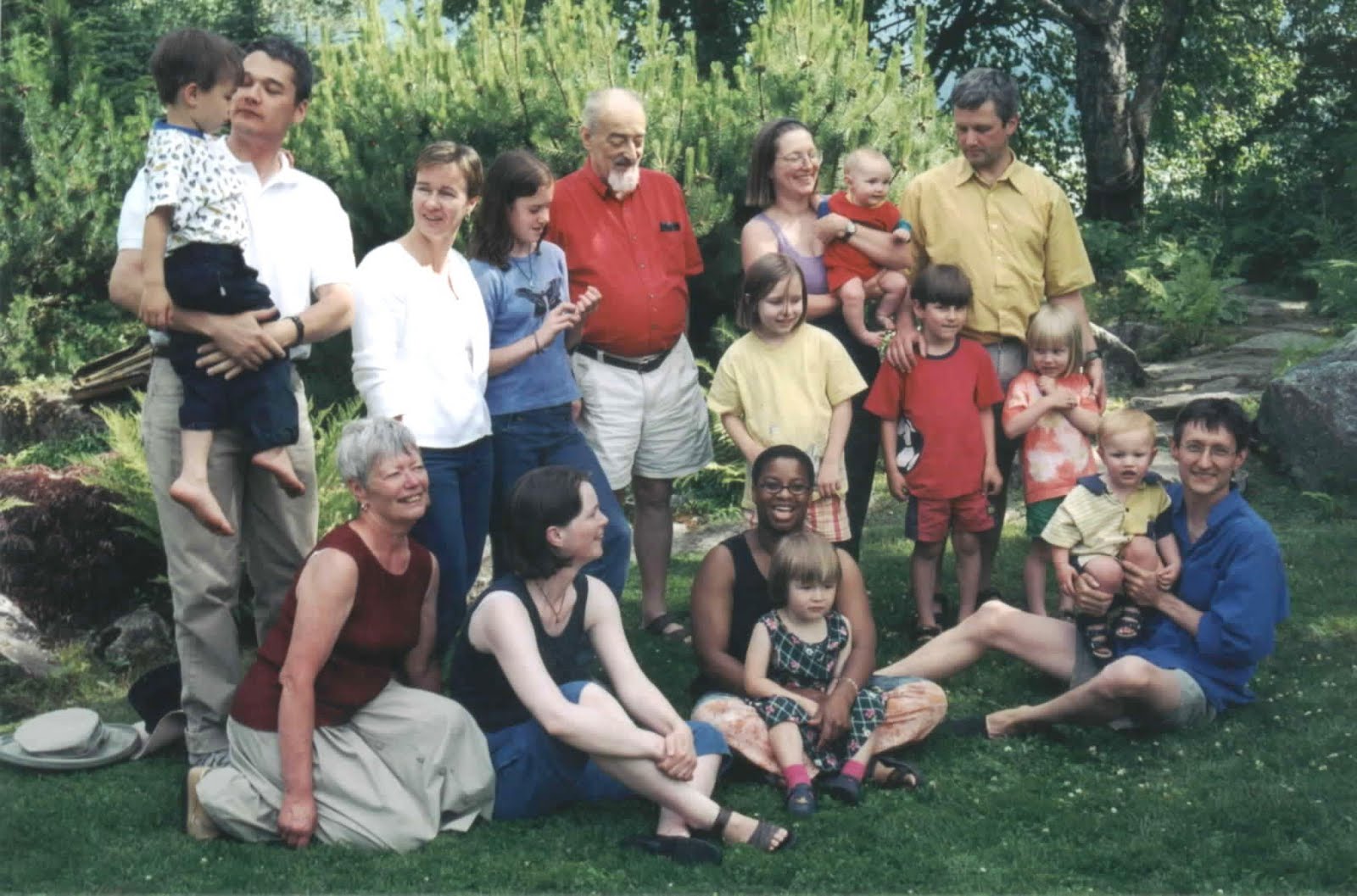
Saturday, April 12, 2003
Transition challenges
This is a message I discovered deep in my "Sent Items" e-mail folder. I've posted it with the original date, but almost 3 years after the fact:
My two older kids especially have always had a hard time with transitions. Left to their own devices they will be found at noon, starving and cranky, still in their pyjamas and still engaged in whatever was the first thing they started doing when they rolled out of bed. They're 10 and 8.
But it does get better. They will now often allow themselves to be pried away with just a nudge or two. Gradually I find them setting their own limits and making small efforts to manage their time effectively. Hard-won progress, let me tell you, and definitely related in large part to maturity. And just in the last 2 weeks I find my 10yo doing some starkly mature time-management things. I hope it's maturity and not just a fluke.
I still sometimes resent not being able to go places, do interesting things, visit friends. I sometimes resent the time wasted on long transitions. But when I find myself disappointed by expectations that weren't realized, it's time for me and my kids to re-examine things. Invariably when we talk about it it turns out they're disappointed too. They'll complain "why do we never do anything fun?" (Well, maybe because you refused to leave your marble maze to go to gym night, and didn't want to get out of bed to go to Bob's place, and didn't manage to get your coat on in time to get to the community garden, and....).
Resentment is a call to communication and problem-solving. Sometimes it's me who needs to be more realistic in my expectations. Sometimes there are things my kids need to allow them to make transitions more easily.
Here are some things we've discovered:
Mealtimes are natural transition-times. If I can get my kids to the table with a meal and some conversation, I can usually get them headed somewhere afterwards.
A rhythm to our days is a big help. Not a routine, just a gentle predictability. A dance, not a march. Things are offered, not compelled. Often the kids decline most of my offers, but I continue to make the offers every day anyway and sometimes, out of the blue, they decide to take me up on things quite consistently for a while. They seem to appreciate me acting as their sundial, subtly reminding them what time of day it is.
We talk the night before about our upcoming day. We run through the time-management stuff... what will need to get done, and when, if we're to do such-and-such. Last night I said "Tomorrow is Holly's memorial service at 2, and then you're invited to Grandma's at 7 for a sleepover. I'm busy with a rehearsal so you'll have to get dressed by 1:30 in something nice, and also get your overnight stuff packed on your own before supper. Do you think you can do that? Do you still want to go to both those things?" We write stuff on a family notice board, and my three older kids (6, 8 & 10) have watches to make it easier for them to keep track on their own. I don't expect them to manage this stuff without reminders but it helps them to have the knowledge and the tools anyway.
I am consistent in making sure the kids follow through on things where their absence will affect others. To me this is a matter of respect. Going to the park is discretionary. Going to art class is not, because the teacher buys materials for every child, and plans projects that run over 2 or 3 classes. If you commit to something like that, you go unless you have a very good reason not to. I am quite clear with my kids about this, and they know where I will give and where I will not. Occasionally I will have to say "it's okay if you don't want to participate when you get there, but we need to go, because they're expecting you." Transitions are the problem for us, not participation, so the reluctant child always enthusiastically joins in when s/he gets there.
I'm a dawdler by nature and I know that vague and remote deadlines are the worst for us slowpokes. If I catch myself saying to my kids "you need to start getting ready soon" I know we're all in trouble. Around here "start" (to get ready) and "soon" are not good words to use. "Do it" and "now" are much more effective. While my slowpoke kids benefit from warning that deadlines will be arriving, when the actual deadline is presented, it needs to be firm and immediate. If we're headed to piano lesson or art class or gymnastics and need to be out the door by 3 pm, I tell them "It's 2 o'clock. We're going to be leaving in an hour. Just so you know." At 2:55, I'll get right in their space and make eye contact and say "It's time to get ready. You need to stop what you're doing. Here is a sweatshirt. Put it on. If you don't want to wear this one, I will take you to your room and you can pick out another. Then you will need to put your shoes on and get in the car." And I will walk the child through the getting-the-shirt-and-shoes step by step and with physical guidance if necessary, never giving him the chance to wander off-task.
If you haven't been doing it this way, it may take a while until your child adjusts to the fact that there's no "wiggle room" any more. Explain to her that you've changed tactics, and why, and she'll probably get it. "When I give you half an hour to get ready and leave it up to you, you get lost along the way. So I'm going to give you five minutes, and help keep you from getting lost. That way you get more play time, and I get less aggravation. What it means, though, is that you have to come now. Understand?"
I have to say that we have remarkably little difficulty these days getting to non-discretionary appointments and activities. So maybe it does get easier.
On the other hand I still sometimes despair that my children could sweep the Olympic medals in Procrastination.
My two older kids especially have always had a hard time with transitions. Left to their own devices they will be found at noon, starving and cranky, still in their pyjamas and still engaged in whatever was the first thing they started doing when they rolled out of bed. They're 10 and 8.
But it does get better. They will now often allow themselves to be pried away with just a nudge or two. Gradually I find them setting their own limits and making small efforts to manage their time effectively. Hard-won progress, let me tell you, and definitely related in large part to maturity. And just in the last 2 weeks I find my 10yo doing some starkly mature time-management things. I hope it's maturity and not just a fluke.
I still sometimes resent not being able to go places, do interesting things, visit friends. I sometimes resent the time wasted on long transitions. But when I find myself disappointed by expectations that weren't realized, it's time for me and my kids to re-examine things. Invariably when we talk about it it turns out they're disappointed too. They'll complain "why do we never do anything fun?" (Well, maybe because you refused to leave your marble maze to go to gym night, and didn't want to get out of bed to go to Bob's place, and didn't manage to get your coat on in time to get to the community garden, and....
Resentment is a call to communication and problem-solving. Sometimes it's me who needs to be more realistic in my expectations. Sometimes there are things my kids need to allow them to make transitions more easily.
Here are some things we've discovered:
Mealtimes are natural transition-times. If I can get my kids to the table with a meal and some conversation, I can usually get them headed somewhere afterwards.
A rhythm to our days is a big help. Not a routine, just a gentle predictability. A dance, not a march. Things are offered, not compelled. Often the kids decline most of my offers, but I continue to make the offers every day anyway and sometimes, out of the blue, they decide to take me up on things quite consistently for a while. They seem to appreciate me acting as their sundial, subtly reminding them what time of day it is.
We talk the night before about our upcoming day. We run through the time-management stuff... what will need to get done, and when, if we're to do such-and-such. Last night I said "Tomorrow is Holly's memorial service at 2, and then you're invited to Grandma's at 7 for a sleepover. I'm busy with a rehearsal so you'll have to get dressed by 1:30 in something nice, and also get your overnight stuff packed on your own before supper. Do you think you can do that? Do you still want to go to both those things?" We write stuff on a family notice board, and my three older kids (6, 8 & 10) have watches to make it easier for them to keep track on their own. I don't expect them to manage this stuff without reminders but it helps them to have the knowledge and the tools anyway.
I am consistent in making sure the kids follow through on things where their absence will affect others. To me this is a matter of respect. Going to the park is discretionary. Going to art class is not, because the teacher buys materials for every child, and plans projects that run over 2 or 3 classes. If you commit to something like that, you go unless you have a very good reason not to. I am quite clear with my kids about this, and they know where I will give and where I will not. Occasionally I will have to say "it's okay if you don't want to participate when you get there, but we need to go, because they're expecting you." Transitions are the problem for us, not participation, so the reluctant child always enthusiastically joins in when s/he gets there.
I'm a dawdler by nature and I know that vague and remote deadlines are the worst for us slowpokes. If I catch myself saying to my kids "you need to start getting ready soon" I know we're all in trouble. Around here "start" (to get ready) and "soon" are not good words to use. "Do it" and "now" are much more effective. While my slowpoke kids benefit from warning that deadlines will be arriving, when the actual deadline is presented, it needs to be firm and immediate. If we're headed to piano lesson or art class or gymnastics and need to be out the door by 3 pm, I tell them "It's 2 o'clock. We're going to be leaving in an hour. Just so you know." At 2:55, I'll get right in their space and make eye contact and say "It's time to get ready. You need to stop what you're doing. Here is a sweatshirt. Put it on. If you don't want to wear this one, I will take you to your room and you can pick out another. Then you will need to put your shoes on and get in the car." And I will walk the child through the getting-the-shirt-and-shoes step by step and with physical guidance if necessary, never giving him the chance to wander off-task.
If you haven't been doing it this way, it may take a while until your child adjusts to the fact that there's no "wiggle room" any more. Explain to her that you've changed tactics, and why, and she'll probably get it. "When I give you half an hour to get ready and leave it up to you, you get lost along the way. So I'm going to give you five minutes, and help keep you from getting lost. That way you get more play time, and I get less aggravation. What it means, though, is that you have to come now. Understand?"
I have to say that we have remarkably little difficulty these days getting to non-discretionary appointments and activities. So maybe it does get easier.
On the other hand I still sometimes despair that my children could sweep the Olympic medals in Procrastination.
Labels:
Family Matters
Wednesday, July 17, 2002
Erin's Violin Blog 24
The big push in the past few months has been to find a balance between more autonomy and responsibility for Erin in her practising, and the ongoing need for guidance and facilitation in problem-solving. She's now wrapping up the Vivaldi g minor concerto, 3rd movement and trying to keep the weighty Book 4 and 5 repertoire firmly within her grasp. Two complete Vivaldi Concerti and the Bach Double are a lot to retain when they've all been learned in the past 6 months. She's practising about a third of the time completely independently, and taking daily responsibility for her review work. After some growing pains, the independent practising is proving increasingly diligent and efficient. Eight seems pretty young for this, I agree, but she's always craved autonomy and independence, this kid, easily falling into patterns of conflict and resistence, and since we were wanting her to take more responsibility for musical details, this practising independence fits with the "total program".
We've opted not to do an institute this summer; Noah wasn't quite ready. Instead Erin will again do the local music summer school on piano, with an orchestra option on violin. She'll also have the chance to work on three or four violin-piano duet numbers with a pianist friend of hers who will be visiting for a week. The two girls live 9 hours apart but became fast friends last summer. They're quite well-matched on their respective instruments. It should be a productive and enjoyable partnership.
We've opted not to do an institute this summer; Noah wasn't quite ready. Instead Erin will again do the local music summer school on piano, with an orchestra option on violin. She'll also have the chance to work on three or four violin-piano duet numbers with a pianist friend of hers who will be visiting for a week. The two girls live 9 hours apart but became fast friends last summer. They're quite well-matched on their respective instruments. It should be a productive and enjoyable partnership.
Labels:
Music education
Sunday, March 10, 2002
Erin's Violin Blog 23
All I can say is it's lucky we're homeschooling. Music is taking up a lot of time, especially as Erin's piano abilities have begun to catch up to her violin abilities. We now spend over 2 hours a day practising the two instruments, and that doesn't include the time and energy devoted to lessons (and piano is now requiring an all-day out-of-town excursion), theory classes, group classes and orchestra rehearsals.
After a couple of weeks of really conflict-ridden practising, we seem to be back in the swing of things. Although Erin goes through regular spurts when she is extremely difficult to work with during practising, she's always adamant that she doesn't want to quit studying either instrument. So we keep trying to find ways to work together productively, even when it the task seems insurmountable. Recently we've been dealing with the loss of structure of weekly lessons, as Erin's grandma-violin-teacher is abroad for several weeks. We've started a regular practising challenge. She's trying for 64 days in a row. My own students were all asked to choose a goal, either 16, 36, 64 or 100 days in a row, and Erin has joined in with a 64-day challenge. She's already 40 days into a piano-100-day-self-challenge, so adding violin isn't such a big deal.
So here we are again, out the other side of the recent dark tunnel and we both feel happy about how things are going. We've done the "spade work" on the Bach Double 2nd violin part and are gradually putting the 1st and 2nd violin parts together. Almost half the piece is fitting together securely now. Our practising routine now includes some three-octave scales and arpeggios, a shifting exercise or two, some brief vibrato-development exercises, work on the Bach Double as a duet, polishing work on at least one other Book 4 piece, work on the two "new" pieces at the start of Book 5, playing through a review piece from each of the earlier books and a couple of fiddle tunes (Tam Lynn's Reel is a current favourite), and a few minutes spent on orchestra music. No wonder it seems to take a while!
We're toying with the idea of a summer Suzuki institute, but not certain. Because Erin's everyday life revolves around music, musical friends and musical events, rather than school, institutes aren't quite as much the unique immersion experience that they are for some children. I'm anticipating that Noah, her younger brother, won't be emotionally ready to be enrolled as a student this summer, and I'm not exactly relishing the thought of single-parenting my way through an intense institute week, with the needs of two younger siblings being to some extent set aside. We may opt again for last summer's solution: piano enrollment at our local (traditional) music summer school, with orchestral participation on violin as an extra hour. That way Noah and Sophie can spend a certain amount of time at home with their dad, playing and having their needs met more adequately.
One of the things that delights me about Erin's unique situation as a young, fairly advanced violinist in a small rural program is her lack of any condecension or competitiveness concerning other students. Perhaps it's partly her nature, partly the fact that she's not in an age-stratified environment at school, and partly the collection of musical friends she's blessed with, but she is not becoming a musical snob as she becomes more and more capable. She loves participating in group classes with the Book 1 kids, loves playing in community orchestra and giggling over missed entries with the grownups, loves "taking notes" for her little brother during his Twinkle practising.
Labels:
Music education
Saturday, March 09, 2002
Parental deschooling
This is a post I discovered in my e-mail "sent" file on September 1, 2007. It was written over five years previously. I've copied it in below and adjusted the blog entry date to match the original writing:
Katherine wrote
"My concerns are mainly centred around the potential for personality conflict between my children and me. I am trained as an engineer and am naturally quite competitive and goal-oriented. I am concerned that I would push my kids too hard. Part of what I don't like about the school they are in now is the acceptance of mediocrity."
I replied:
My kids have never gone to school in the first place, so I had a gradual "apprenticeship" to homeschooling... we just slipped quietly in the door the year my daughter didn't start Kindergarten, while we didn't change anything in our family routine. But I trained as a physician, and I tend to be very goal-oriented and strong-willed, so the things you are worried about would be exactly those I'd worry about in your situation: expectations too high, power struggles, and so on.
What I've discovered through my gradual apprenticeship in home-based learning is that it's at least as much an education for the parent as it is for the child, and I mean that in a very, very good way. My understanding of education is so much richer and more thoughtful (still learning, though!) than it ever would have been otherwise. I have changed... I have gradually embraced a totally new set of beliefs about the process of learning.
It's been mostly a liberating, empowering experience, though I'll confess I've resisted some of it and still do. I discovered that the set of assumptions that govern school are meaningless outside that context. Things like "high levels of structure and organization are required to assure you're doing a proper serious job", and "things need to be learned in a specific order and mastered before moving on", and "children won't learn anything hard unless they're forced to" and "the child is the recipient of learning dispensed by a teacher". The entire foundation of my understanding of the nature of education has been gradually knocked out from underneath me. In place I've built up something new, something that's more trusting of human nature and respectful of the individual experiences of unique human beings, something that's making me a happier, stronger, less neurotic person.
So if you're willing to call into question all your assumptions about education (and, by extension, parenting), I think you'll find that home-based learning will grow on you in a very good way. Your children will show you where you need to grow and change and learn.
At the outset I read lots of good books about homeschooling and natural learning. This might appeal to the engineer in you. Here are a few you might ferret out...
Better Than School by Nancy Wallace. Life and trials within an unschooling family of preciously artsy, yet in many senses, perfectly normal kids. Very honest writing without pretence. Out of print but probably the best book, overall, about homeschooling and natural learning, that I've ever read. Track it down through inter-library loan if you can.
How Children Learn by John Holt ... observations concerning that natural learning of children, and the way in which we well-meaning adults often derail and destroy kids' natural aptitudes and motivation for learning
Family Matters: Why Homeschooling Makes Sense by David Guterson. Excellent persuasive writing about *why* you should homeschool.
Dumbing Us Down by John Taylor Gatto ... more on "why", with a more philosophical spin about the flawed nature of public education
No Contest: the Case Against Competition by Alfie Kohn... since you mentioned your competitive nature, you might find this one really interesting. It's not about homeschooling in any direct way, but it's all one big ball of wax. Very persuasive. Kohn's book about rewards and incentives ("Punished by Rewards") is also an excellent antidote to any carrot-and-stick tendencies one might have.
My eldest child is very strong-willed and so am I. My general approach is that if she develops resistence, there's something wrong with the whole equation, not something wrong with her. So if she's not wanting to do something that I honestly believe is exceedingly important, I need to adapt her environment to inspire her, not force her. Any more controlling strategy is doomed. Absolutely doomed. She is training me to give her the autonomy she craves, and when I trust her enough to give it, she amazes me. Trust is the crux of it. I am getting better at trusting that, in the absence of coercive parenting, she really will want to grow to be an intelligent, responsible, productive and capable human being. She rewards my trust.
I have a feeling that if my elder daughter were in school, we would never have had to learn how to really get along. This is the gift (and the curse!) of homeschooling: you will develop deep, rich and complex relationships with your children, relationships which will be able to weather all sorts of potential conflict and stress. There's simply no choice. You will learn. They will show you when you're moving the wrong direction. They will show you what they need.
Labels:
Homeschooling,
Thinking about learning
Sunday, December 02, 2001
Erin's Violin Blog 22

Labels:
Music education
Friday, September 21, 2001
Saturday, September 08, 2001
Erin's Violin Blog 20
Two weeks ago Erin moved onto a really nice eighth-sized violin and is really enjoying the depth and clarity of tone the new instrument is affording her. It's still a little bit of a stretch, but she's coping fine. Starting next week we'll be back into a regular routine of weekly lessons, so I guess it's time for an update.
Erin's summer workshop experience this year focused on piano at our local music summer school. She did participate in the beginner orchestra on violin, but unfortunately there just wasn't a realistic option for a Suzuki violin institute for her this year. Nonetheless, she's continued to barrel ahead in her learning.
She finished the Book 3 repertoire up in mid-July and is now ready to start polishing the second piece in Book 4. Her note-learning continues to come readily, and her posture is generally reasonable. Her vibrato has gained stability in the past few weeks and is occuring freely throughout her repertoire. Last year at this time she was working on The Two Grenadiers in mid-Book 2 and now she's easily mastering Book 4 repertoire, with decent vibrato, much-improved posture, good shifting facility and reasonable sight-reading skills. So it feels to me like she's finally reaping the rewards of her early start, rich environment and diligent work.
Labels:
Music education
Thursday, March 15, 2001
Erin's Violin Blog 19
Big news, of a magnitude that I wasn't even aware of until I realized my last contribution here was just two months ago. Erin's left hand has gone snap! into a wonderful neutral position, her fingers are flexing gently and accurately from the base joints and her intonation has improved astronomically as a result. I have no idea why it suddenly happened, but it did. Perhaps it was related to the early introduction of position-work and the daily exercises utilizing rapid back and forths to harmonics. Or perhaps she just decided it was time. At any rate, she's now rollicking through Book 3 (she'll be starting the Gavotte in g minor next week), is comfortable in third position, is working on shifting and beginning to get ready for vibrato. Her tone is also miles better, her shoulders are half-way relaxed and her general appearance of comfort with the instrument is an order of magnitude better.
She's also become a highly motivated and skilled sight-reader in the past couple of months. She started Joanne Martin's I Can Read Music book 1 just before Christmas and is now confidently completing it. Every day she does a full lesson and there rarely seems to be any teaching, explaining, reinforcing or practice necessary. The new rhythms and notes just seem to roll off her fingers.
Practising has become, in the past few months, a reasonably comfortable part of our daily routine. It's still very hard to get it initiated, but once we're going she's attentive, motivated and enjoying things. Review makes up almost 70% of our time, and she's been very diligent about consolidating recent pieces with continued daily work, especially considering how quickly she's acquired them. We now have five big "recent pieces" that get daily polishing work, in addition to her regular rota of review repertoire.
Labels:
Music education
Saturday, January 13, 2001
Erin's Violin Blog 18
Things are continuing to move ahead for Erin at a rewarding, steady pace. She's working on Beethoven Minuet now and is looking forward to starting Book 3 in the next couple of months. Although practising is never easy for her to get initiated, she is still doing the better part of an hour a day on each of violin and piano. The focus on review continues, with older review and the playing of recently polished pieces comprising the larger proportion of her practice time.
We're also now doing a regular improvisation exercise and some note-reading practice every day. Both of these endeavours are coming along really nicely. I am an amazed and delighted observer of her improv efforts. She uses sequences, specific bowing/articulation patterns, rhythmic motifs and runs of perfectly plotted-out passing notes to reach cadences as planned. It's amazing to realize that she really is internalizing, integrating and generalizing all the musical conventions she's encountering in her studies. They are truly a part of her now.
Posture continues to be an issue, of course. The best I can say is that things aren't getting any worse, and that she does now seem to be occasionally interested in autonomously setting and monitoring good posture habits in her easy review repertoire. We're still a long way from having good replacement habits established, but there's a glimmer of interest now, I think, in her fixing her own problems. I'm trying to gently persuade her that she's closing in on the repertoire level where her posture problems are going to become technically limiting for her (Book 4, as I see it) and that there is some urgency involved.
The other issue that is continuing in the forefront is that of role-modelling. The only students in the area who are more advanced than she are two teenagers. It would be so nice for her to have students she could look up to, whose posture, tone, musicianship and technical facility she could aspire to. She's doing amazingly well to maintain her diligence when she knows not a single other child under fourteen who puts anywhere close to as much committment into musical study of any description as she. The best I can hope for is to give her a little taste of a peer group at the occasional institute, and to the best of my ability give her contact with children and adults who take any pursuit seriously enough to work diligently at it every day. It's a tall order.
Labels:
Music education
Saturday, September 16, 2000
Erin's Violin Blog 17
So far so good! We returned home, made the switch to a tenth-sized instrument, and have established a routine of daily practising. The focus on review continues, with Erin spending about 80% of her practising time playing through her previously learned repertoire. She really enjoys the systematic nature of this, and we now have a review book which comprises her permanent repertoire record. Within this are pages for each piece which list the teaching points and reminders for review, and give a mechanism for counting repetitions. She's working from scratch to accumulate 100 documented repetitions of each piece.
We've been working well together on detail work in The Two Grenadiers and Witches' Dance is coming along nicely. We'll be starting regular lessons with her Grandma this week. For the past couple of years we've scheduled lessons only when we felt a particular need and desire, but a more regular schedule seems to feel right for all of us now. She already has such a schedule for piano lessons, so it's nothing new.
The posture issues all still need work.... the hunched shoulders, the squeezing left hand, and a somewhat wobbly, insecure bowhold. We intend to attack them in this order, since the shoulders are part of the cause of the more distal problems, and the bowhold is the least problematic of the bunch. She has made significant gains in the shoulder posture in the past month, and I have almost totally stopped reminding or correcting her on this. I'm hoping she'll notice how nice it is to play without me picking away at her posture and find this motivating when it comes time to work on the next posture task.
Now that we're doing lots of good practising on both violin and piano, I'm realizing what a big committment it is to do both instruments "properly". Sometimes more than two hours a day are spent on musical things at home, once we include the improvisation, unstructured review playing on piano, and the theory work she's doing (partly on the computer). Two instruments would certainly not work for most six-year-olds attending school, but homeschooling makes it a possibility for us.
Labels:
Music education
Wednesday, August 30, 2000
Erin's Violin Blog 16
 During the fall we managed only sporadic lessons. As a result, practising was a struggle for a couple of months. Then Erin decided the time had come to do some intensive remediation on her left hand position. At the summer institute in Calgary her master class teacher had "planted five seeds", ideas for focusing on posture. Most of these related to her left hand (wrist, thumb, finger independence) and so Erin diligently practised 100 Twinkles with perfect left hand position. She then scheduled a lesson with her Grandma to surprise her with her new posture. A couple of days before the lesson, when her Grandma attended a group class as an observer, Erin intentionally squashed her wrist and clamped her thumb, to preserve the "surprise". She thought this was the cleverest thing!
The surprise came off nicely, but for some reason it wasn't enough to carry her out off the plateau she was on. I think some of it may have had to do with the energy that was going into her second instrument, piano. She'd just begun studying piano, and was finding it very gratifying, and not nearly as difficult as the violin. She was learning a half dozen little primer pieces every week or two, and no one was hassling her about tone and intonation and posture, and everyone thought she was doing terrifically, even though all she did was play, not really practise the piano.
(By way of explanation, I should say that I don't think this would have been the time for Erin to start a second instrument if not for two things: first, as a homeschooler, she had the time, and second, as the daughter of her primary violin teacher, and the grand-daughter of her secondary violin teacher, she needed a teacher-student relationship outside the family.)
At any rate, we had our typical winter lull in violin work. I was dismayed to see the gains she'd made in her left hand position begin to slip away, and the tension in her neck and shoulders worsen. I waited expectantly for the inevitable end of the lull. And waited. And waited. And then I couldn't stand waiting any longer, seeing the posture gradually worsen. She was practising, somewhat reluctantly, every couple of days, but not really working with me, just putting in the time, playing.
I scheduled some regular lessons for her, and decided that I was, no matter what, going to make sure she played every day and actually worked on a little bit of technique. As had been the case two years earlier, it wasn't so much anything I did, it was mostly just a change in my attitude and orientation. I was going to make this work! I was going to help get my daughter over the hump. Her resistance had been just enough to reduce my enthusiasm for daily practising. The reduction in my enthusiasm prevented the semi-regular practising we were doing from being stimulating and enjoyable. And so the lull persisted, until I resolved to pick both of us up by our bootstraps. Miraculously (and with the aid of a few creative games) it worked. Within two or three lessons her posture (all of it! not just the left hand, but the shoulders, neck and head, too) seemed to fall into place. There were days when she actually looked gorgeous playing!
And of course, the repertoire began coming as well. In December we'd begun dabbling in Gossec Gavotte. In early March we attacked it seriously. Now, at the end of May, it is very nicely polished, almost recital-ready, and she's just finished learning Brahms Waltz.
Locally we've finally managed to get group classes happening on a regular basis. Erin has a number of good friends amongst my small group of students, but she falls in a funny place because she started violin so much younger than they did. From a social standpoint she prefers the beginner class which includes her younger brother and her agemates, all pre-Twinklers or new Twinklers. But from a musical standpoint, she's a better fit for the mid-Book-1 to Book 4 group made up of 8 to 13-year-olds. So she flits back and forth between the two groups, attending as much of both as she can. At any rate, the group exposure can't be hurting her, and I'm sure she's helping to inspire some of the other children, too.
Things seem to be going fairly well, but I'm doing my best not to get complacent. I know the posture issues aren't solved yet. Everything still collapses into knots when she's distracted, annoyed or coping with new technical details. I hope we can keep the momentum going for a time. It's so nice to see her enjoying her progress again, working more-or-less-willingly on details, and becoming more comfortable with taking guidance and suggestions on polishing details.
Her piano playing has become more challenging in the course of the year: she's learning to read music and is now having to cope with changes in hand position, technique exercises, and detailed practice "hands separately". It's a relief to the violin teachers in her life to see her needing to use diligence and repetition in her piano work! Somehow it seemed unfair that it should come so easily at first. But I have to remind both myself and her that it only came easily because of all she'd already learned on the violin.
This summer, to cap off her third year of violin playing, we travelled across Canada for (among other things) a week-long Suzuki institute in Waterloo, Ontario. In the month prior, we made review work a big focus and noticed grand strides in tone production. Motivation ran high, and the institute was a positive experience. For once Erin was in classes where their were other children her age, rather than children who were all older than her. She made friends, established a lot of positive independence from her mother, and was incredibly focused, cheerful and attentive. It was hard to believe this was the same child who had been in outer space during group classes at the Penticton institute two years earlier.
Erin is now poised for a switch to a tenth-sized instrument. And time will tell whether we go through our annual fall slump. The long camping and visiting trip home from Ontario was of course a violin-free time, and it may be difficult to re-enter regular home life and daily practising without that sense of let-down. Wish us luck!
Labels:
Music education
Subscribe to:
Posts (Atom)